
Helium 10 alternative: seller suite or ecommerce API platform?
By Nexscope Team · Published September 17, 2026 · Updated September 17, 2026
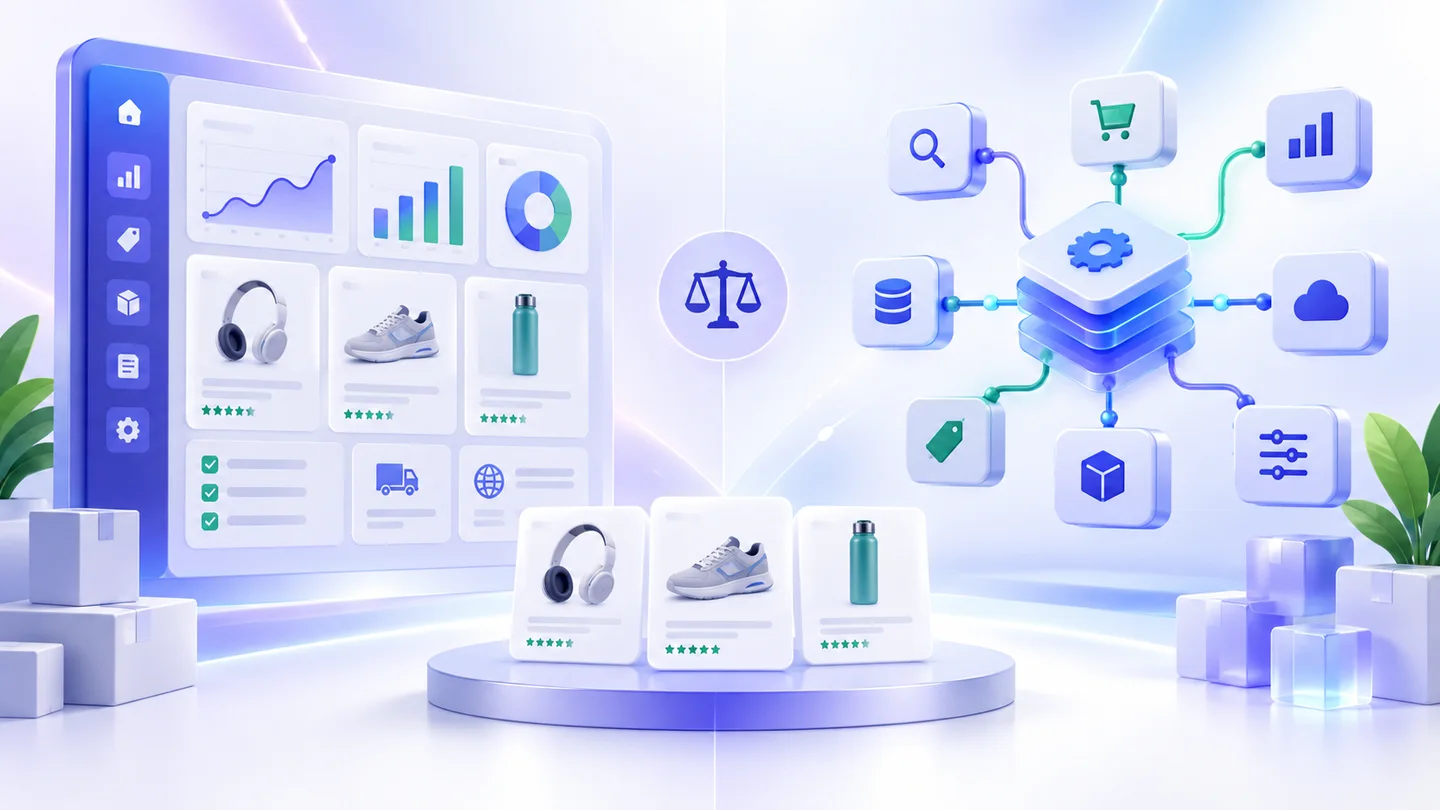
Helium 10 and Nexscope are alternatives only for specific Amazon research workflows—not complete substitutes. Helium 10 is an all-in-one seller suite spanning product and keyword research, listings, operations, education, and AI-assisted features. Nexscope is programmable commerce infrastructure for developers, SaaS products, data teams, and AI agents.
TL;DR: Choose Helium 10 when sellers want a unified interface for running an Amazon business. Evaluate Nexscope when your primary need is to call ecommerce data or creative capabilities from your own application, automation, or agent. Compare the workflow you will actually use, not the total number of features.
Helium 10 vs Nexscope at a glance
| Evaluation area | Helium 10 | Nexscope |
|---|---|---|
| Primary product | All-in-one Amazon seller software suite | Ecommerce API, MCP, Skills, and AI-workflow platform |
| Typical user | Sellers and operators working in a hosted interface | Developers, SaaS companies, agencies, analysts, and AI agents |
| Main jobs | Product and keyword research, listing work, operations, training, and other seller workflows | Programmable research, commerce data, creative capabilities, and agent integrations |
| Commercial shape | Tiered seller plans with plan-specific limits and features | Data Credits, including pay-as-you-go top-ups; capability usage varies |
| Automation | Product features and current plan integrations should be checked directly | REST, MCP, and reusable Skills are core access modes |
| Replacement scope | Provides seller-facing workflows that an API platform may not reproduce | Does not attempt to replace every seller-suite dashboard or operating feature |
What Helium 10 does well
Helium 10 gives Amazon sellers a connected workspace. Its public product and pricing pages group research, keyword, listing, operations, education, and AI-assisted features into seller plans. That reduces the need to assemble each daily task from raw APIs.
Its keyword research product is designed to move from discovery and competitor analysis into seller action. For an operator who wants to log in, research a niche, improve a listing, and manage related work, an all-in-one interface can be the correct answer.
Helium 10 also evolves beyond a static collection of dashboards, so buyers should check its current AI, agent, and integration features rather than assume it offers no programmable access. This comparison is about primary product fit, not a claim that one platform owns every access method.
Where Nexscope is different
Nexscope begins with components that another product or agent can call. Its public API catalog spans Amazon research and other ecommerce or creative workflows, while REST, MCP, and Skills provide different ways to integrate those capabilities.
That makes Nexscope a better candidate for use cases such as:
- adding Amazon research to an authenticated SaaS product;
- letting an internal AI agent gather and summarize commerce signals;
- building a Chrome extension backed by server-side API requests;
- combining marketplace research with review analysis, historical data, or creative generation;
- paying for variable API use rather than purchasing a seller seat for every workflow participant.
This flexibility comes with engineering responsibility. Your team owns the interface, permissions, caching, quality checks, and downstream decisions. Nexscope is not a ready-made replacement for every Helium 10 screen, training resource, or seller operation.
Which platform should you choose?
Choose Helium 10 when
- Amazon sellers need one hosted interface for daily research and operations;
- included education and seller workflows are part of the value proposition;
- the team prefers plan-based access to assembling its own application;
- product and keyword research must flow directly into seller-facing tools.
Evaluate Nexscope when
- you are building a SaaS, agency tool, extension, internal system, or AI agent;
- data must be retrieved server-side and presented through your own experience;
- you need REST and MCP access across more than one commerce workflow;
- usage-based credits align better with variable customer demand or a staged launch.
Compare total workflow cost, not just plan price
A seller-suite subscription and an API credit model are difficult to compare using a single monthly number. Define the unit of value first.
For a seller team, that unit might be an active seat completing research and listing work. For an API product, it might be a completed report, a researched ASIN, or a successful customer workflow. Include:
- subscription, credit, or usage charges;
- plan limits and overage behavior;
- engineering and maintenance effort;
- data cleaning, caching, and retries;
- seller training and adoption time;
- the value of tools that can be consolidated—or features you would need to rebuild.
Then run the same defined workflow on both products. For example, use the Amazon competitor-analysis template to create a consistent product set, and the competitor keyword research guide to score relevance and evidence quality.
The practical verdict
Helium 10 is usually the more natural choice for a seller who wants an integrated Amazon operating suite. Nexscope is usually the more natural choice for a builder who wants commerce capabilities inside a custom product or AI system.
Some organizations may use both: a seller team operates in Helium 10 while a development team uses Nexscope for customer-facing or automated workflows. The overlap should be evaluated at the task level.
Explore Nexscope’s Amazon APIs and test the exact capability before committing to a migration.
Compare adjacent decisions: SellerSprite for Amazon keyword research, Keepa API for product history, or Rainforest API for Amazon product data.
Frequently asked questions
Is Nexscope a complete replacement for Helium 10?
No. Nexscope can support overlapping research tasks, but it does not claim to reproduce every seller-facing interface, operational tool, or training feature in Helium 10.
Who should choose Helium 10?
Amazon sellers who want a hosted, connected workspace for research and operations are the clearest fit.
Who should evaluate Nexscope?
Developers, SaaS teams, agencies, and data teams should evaluate it when they need programmable commerce capabilities, agent access, or integration into a custom experience.
Sources and methodology
Reviewed September 17, 2026. Plan names, limits, and product capabilities can change; verify current pages before purchasing.
- Helium 10 pricing
- Helium 10 keyword research tools
- Nexscope Amazon API catalog
- Nexscope API documentation index
- Nexscope pricing
Nexscope is not affiliated with or endorsed by Helium 10. Product names belong to their respective owners.
Last reviewed: 2026-09-17 · Maintained by the official Nexscope team.
Put your next idea to work.
Find a practical workflow, compare the options, or explore the APIs behind it.